




Sticky Rice is our new love.
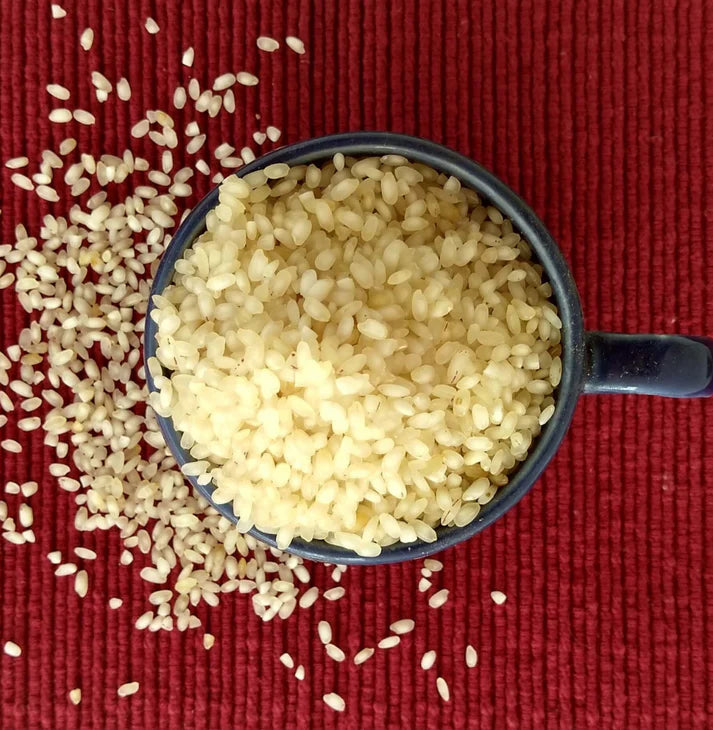
The Thai Mango Dessert is a classic dish made with sticky rice.
Pick any Sushi and the rice in there is sticky.
All those rice varieties that have a sticky consistency when cooked is commonly referred to as "Sticky Rice" or glutinous rice.
No, there is no gluten in this rice (or for that matter any rice)! All rices are gluten-free.
But it is called glutinous to indicate the glue-like consistency.
For the nutrition geeks: The stickiness in these varieties come from the amylopectin (a starch structure).
But why eat sticky rice?
1. Because it allows a certain preparations possible which cannot be done with our regular rice.
So you can enjoy specific dishes when the rice is sticky. Particularly when you want the rice is stick or hold together.
Like dumplings, momos, certain desserts, etc.
2. It is gentle on the stomach, easy to digest and gives quick energy.
So this is ideal when one is sick and does not have enough energy to digest heavier foods.
Like most of us have Congee or Kanji when sick. Sticky Rice can make excellent Kanji!
Most South-east Asians (Thai and Laotians) have sticky rice as a staple combined with their other dishes.
But it has now become popular world-wide.
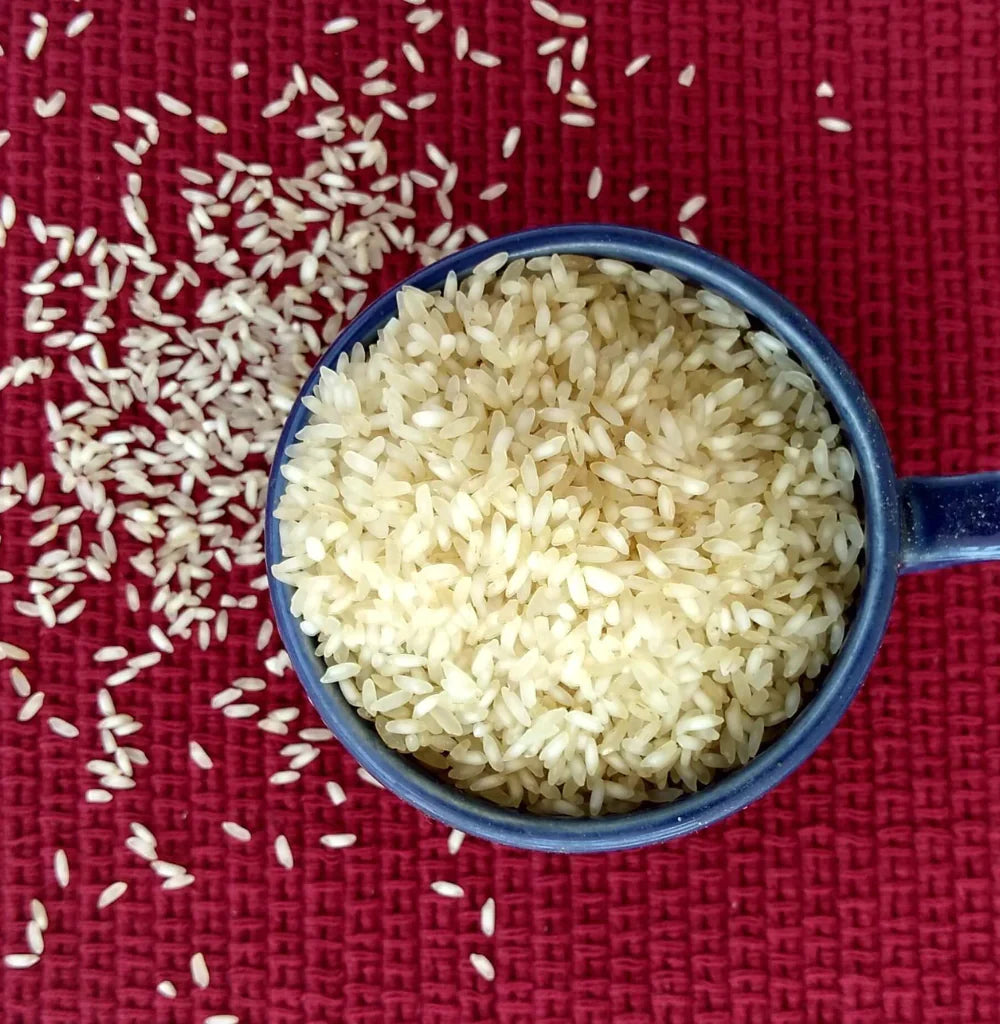
And we here at Bio Basics have a unique offering of our own sticky rice.
Not imported, not super-expensive.
And it is called Illupaipoo Samba - grown in Tamil Nadu. Unpolished, Raw Rice. Therefore full of bran, fibre-rich and nutritious.
Not available all year around, so store it up when you get a chance to enjoy it across the year.
Named after the Mahua flower (called Illupaipoo in Tamil), because it is fragrant even you wash it and soak it, even before cooking it.
Now that is a unique combination of a fragrant and sticky rice!
Interesting tidbit: The paddy is black in colour and the grains have a green tinge.
Ideal for those sticky rice preparations. And also for all the seniors and infants at home